|
THE SHORT |
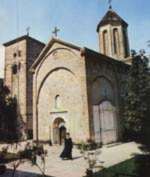
The Monastery of Rača (Racha), with the church dedicated to the Ascension of the Lord, is situated in the vicinity of Bajina Bašta, a town in western Serbia, on the right bank of the Drina-river at the base of the Tara mountain. According to Serbian tradition, this monastery was founded by the Serbian King Dragutin (1276-1316, King of Syrmium, brother of King Milutin and brother-in-law of Hungarian King Stephen V). The monastery was several times burned down, plundered and reconstructed. Today's church building dates from 1826. * * *
Numerous copyists of the Serbian Orthodox Church books - at the term of the 17th and the beginning of the 18th centuries - who worked in the monastery of Rača are named in Serbian literature "The Račans". * * * The Austrian war against Turkey 1683-1699 was supported also by the Serbians, who at that time were under the Turkish yoke. After the Austrian defeat near Kačanik in 1689 they began to withdraw towards the north and a multitude of the Serbians joined them being led by Patriarch Arsenius Čarnojević ('The Great Migration of the Serbians' in 1690). Consequently, the Serbians from southern regions migrated in great crowds to the area of the Sava and Danube rivers, and so they settled down in Bačka, Baranja and Slavonia. Some Serbian settlements reached even to Budapest, and Szent Endre (St. Andrew) was soon to become a cultural centre of the Serbians in Hungary. With such a great migration of the Serbian, the monks of Rača also went over to Hungary. At first they settled down in Szent Endre, and later on they withdrew and came further south, to the monastery of Beočin (Syrmium) on the foothills of the Fruška Gora range, where they continued the work of copying old manuscripts. Among these monks from Rača three of them acquired special merit: Jerotej Račanin, Kiprijan Račanin and Gabriel Stefanović Venclović. * * *
* * * It was in this monastery that the Gospel-Book of Prince Miroslav was preserved during the Second World War. It is the greatest and most significant monument of Serbian literature in the 12th C.,and is decorated with numerous inicial letters and miniatures. This manuscript of priceless value was at that time hidden in the earth, a fact which certainly saved it from destruction which would have affected it in 1943 when reprisal expedition, composed of Bulgarian soldiers, burned down all the monastery buildings. This precious book is now in the Belgrade National Museum.
| |||
WEB DESIGN: 
|
[naslov]
[istorija] [prepisivačka škola]
[slikarstvo] [riznica] [miroslavljevo
jevanđelje]
[fondacija] [naučni skup] [povelja]